High-Protein Keto After 40: How Much Protein Do Women Really Need?
Keto talk usually centers on carbs and fat — but after 40, protein deserves a closer look. Here's a practical, protein-first way to build meals.
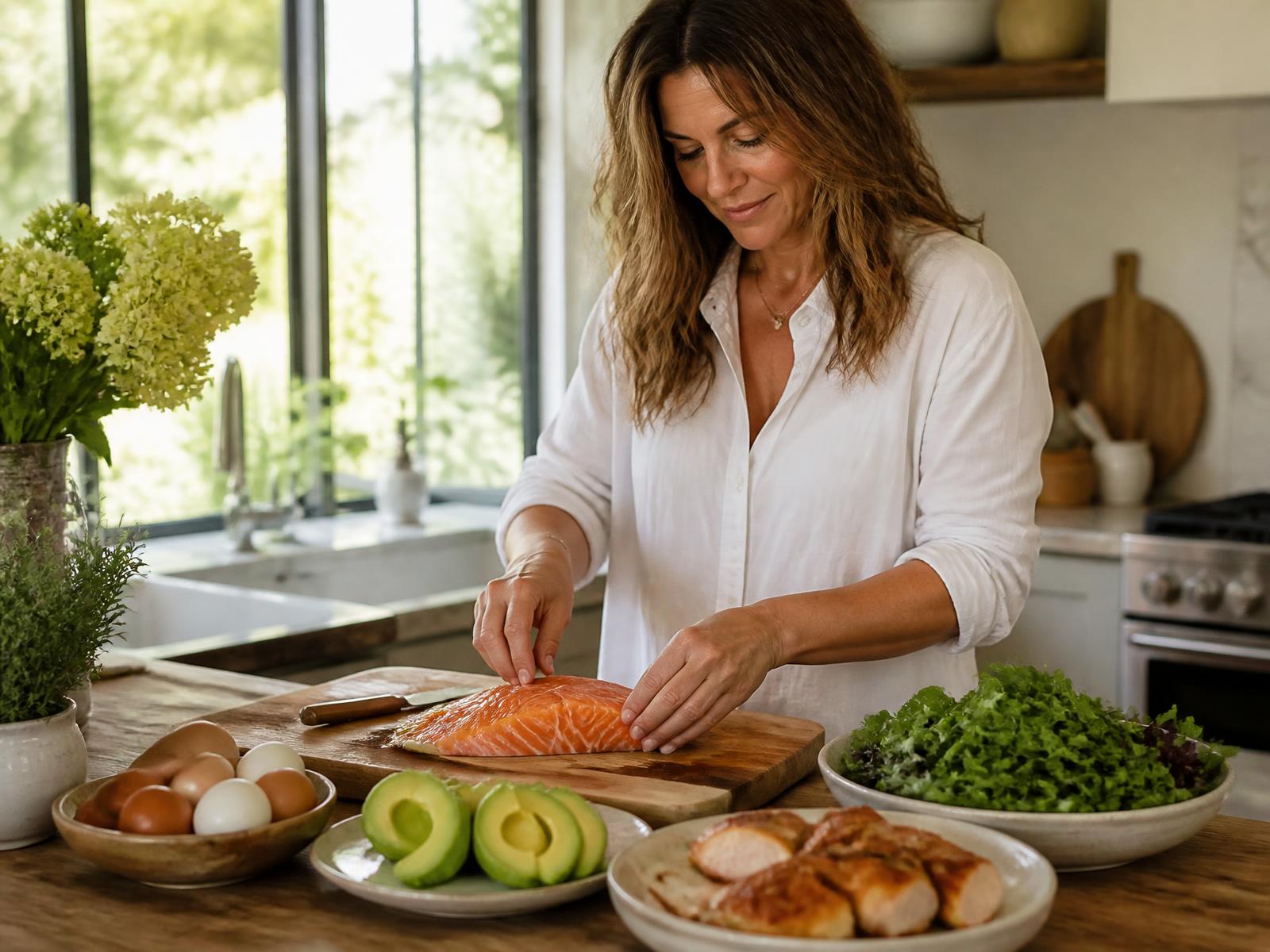
Most keto conversations revolve around two things: how many carbs you're eating and how much fat you're adding. Protein tends to sit quietly in the background, mentioned briefly and then set aside. After 40, that's worth revisiting. Protein is often the piece that makes meals more satisfying, supports the muscle you already have, and helps a lower-carb way of eating feel steady rather than fragile.
Here's the encouraging part: the answer is usually not eating less. It's building better meals. Many women who feel stuck on keto after 40 aren't eating too much — they're eating meals that don't hold them, built around fat and convenience rather than a solid protein base. This article walks through why protein matters more in midlife, what general guidance actually says, and how to put a protein-first approach into practice without counting every gram.
Why Protein Matters More After 40
Protein isn't a magic nutrient, but it quietly supports several things that become more noticeable as the years pass. Maintaining lean muscle is the big one. Muscle supports everyday function — carrying groceries, climbing stairs, getting up off the floor without thinking about it — and it tends to require more deliberate attention over time rather than taking care of itself.
Protein also supports recovery. If you take a brisk walk, garden for an afternoon, or do a short strength session, adequate protein is part of how your body repairs and adapts. Without it, activity can start to feel more depleting than energizing.
Then there's meal satisfaction, which is often the most immediately noticeable benefit. Protein-rich meals tend to hold people longer. If you regularly find yourself hungry an hour after eating, or grazing all evening, an under-proteined breakfast or lunch is one of the first places worth looking. A meal with a clear protein anchor simply carries you further.
One important caveat: protein works best alongside movement. Eating more protein while sitting still does far less than eating enough protein while also doing some form of resistance or strength-based activity. The two belong together, and that pairing matters more than any specific number on a label.
For a shorter overview of what protein does in the body and why it matters with age, see the foundational explainer:
How Much Protein Do Women Over 40 Need?
There's no single perfect number, and anyone who gives you one without knowing anything about you is guessing. Protein needs vary based on several factors:
- Body size — a larger body generally needs more than a smaller one
- Age — needs often shift upward somewhat with age
- Activity level — more movement generally means more need
- Whether you strength train, and how often
- Overall health status and any medical conditions
- Total calorie intake — protein needs matter more when eating less overall
For general orientation, the PROT-AGE Study Group's peer-reviewed position paper suggests roughly 1.0 to 1.2 grams of protein per kilogram of body weight per day for healthy adults over 65. That guidance is for a population, not a personal prescription, and it should not be treated as a universal target for every woman over 40. Your appropriate intake may be higher or lower depending on body size, activity, goals, health, and medical circumstances; a qualified healthcare professional or registered dietitian who knows your history can help individualize it.
If numbers feel stressful, you don't have to use them at all. Many women do well simply by making sure there's a real protein source at every meal and noticing how satisfied they feel afterward. That practical feedback loop is often more useful day to day than a tracking app.
Does Keto Need to Be High Fat and Moderate Protein?
An older idea still floats around keto circles: that protein must be tightly restricted because it will "turn into glucose" and knock you out of ketosis. This concern is generally overstated for most people eating a reasonable amount of protein. The body does have pathways to make glucose from certain amino acids, but that process is regulated by demand — it isn't a simple conveyor belt where every extra bite of chicken becomes sugar in your bloodstream.
In practice, most women following a lower-carb way of eating are far more likely to be under-eating protein than over-eating it. And the cost of deliberately limiting protein to protect a ketone reading can be real: less satisfying meals, less support for muscle, and more hunger later in the day.
The related habit worth questioning is adding fat for its own sake — extra butter, oil, or cream stirred in mainly to raise the fat percentage of a meal. Fat makes food delicious and satisfying, and it absolutely belongs on the plate. But it doesn't need to be piled on to make a meal "keto enough" when the protein portion is still small.
Protein First: A Simpler Way to Build Keto Meals
If you take one practical thing from this article, let it be this three-step order for building a plate. It removes most of the guesswork.
Step 1: Choose your protein
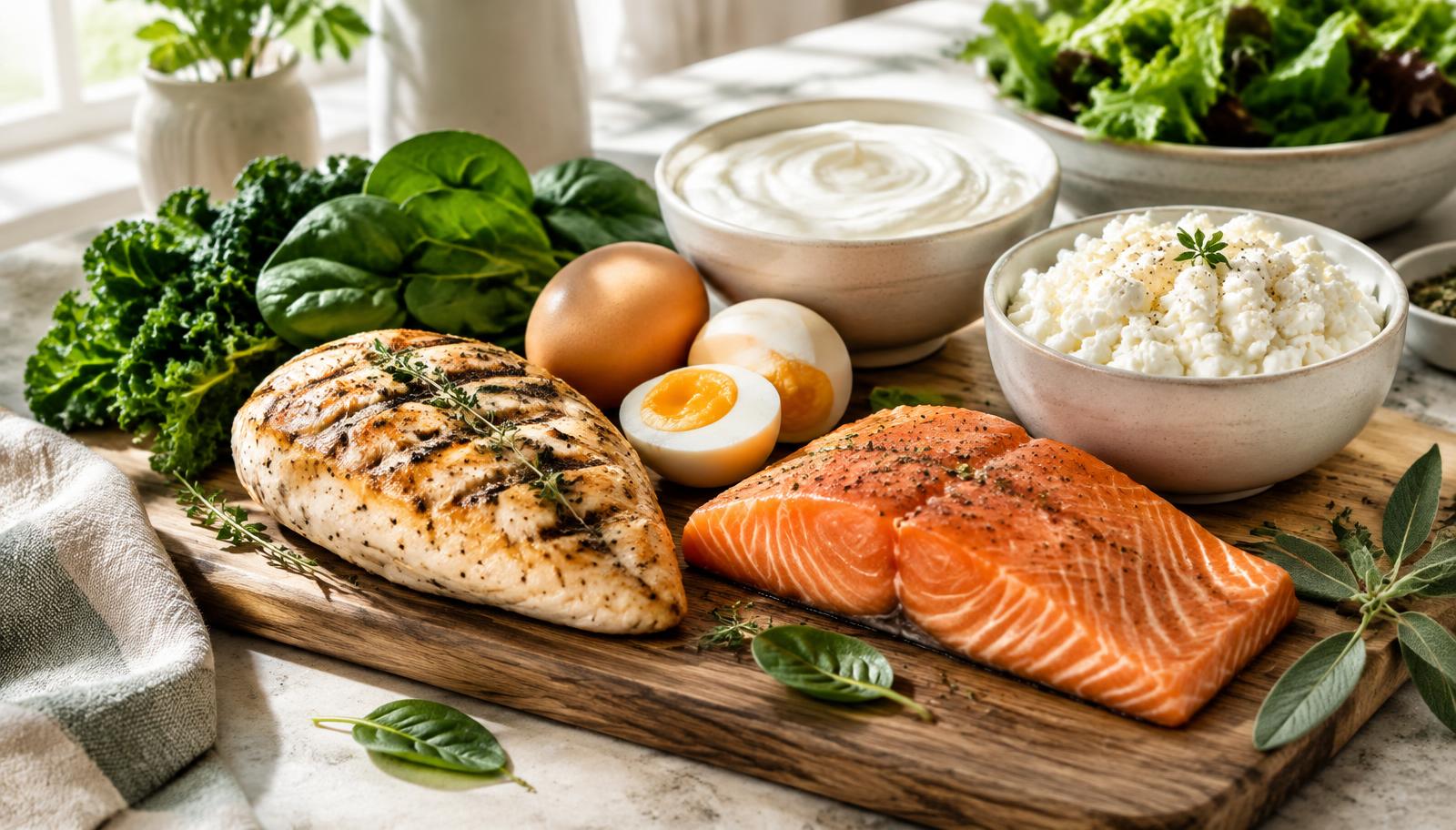
Start here, before anything else. Practical options include eggs, chicken, turkey, beef, salmon, tuna, shrimp, plain Greek yogurt, and cottage cheese. Pick whatever is realistic for your week, your budget, and your cooking energy.
Step 2: Add lower-carb vegetables
Then fill out the plate with vegetables — broccoli, spinach, asparagus, cauliflower, zucchini, green beans, or leafy greens. These add volume, fiber, color, and nutrients without much in the way of carbohydrate.
Step 3: Add fat for flavor and satisfaction
Finish with fat that makes the meal taste good and feel complete: avocado, olive oil, cheese, nuts, or seeds. Enough to enjoy the food, not so much that it crowds out everything else. A meal doesn't need a large added-fat component simply because it's keto.
Protein first. Plants next. Fat for flavor. It's a simple order that produces balanced meals almost automatically.
Should You Spread Protein Throughout the Day?
Many women find it easier to meet their protein needs when it's distributed across meals rather than concentrated in one large dinner. Practically speaking, this tends to help with hunger, energy, and evening snacking — and it's simply easier to eat a moderate amount three times than a very large amount once.
A typical day might look like eggs plus Greek yogurt at breakfast, a chicken salad at lunch, and salmon at dinner. Nothing complicated, just a meaningful protein source each time you eat. If your mornings are rushed or you don't eat breakfast, that's fine too — the point is awareness, not another rule to follow perfectly.
High-Protein Keto Breakfast Ideas
Breakfast is where protein most often falls short, so it's a high-value place to start:
- Eggs with turkey sausage and sliced avocado
- Greek yogurt with berries, chia seeds, and walnuts
- A cottage cheese bowl with cinnamon or cucumber and salt
- A vegetable-and-cheese omelet
- Egg muffins made with chicken sausage and spinach, prepped ahead
High-Protein Keto Lunch Ideas
Lunch works best when it's repeatable and mostly assembled from things you already have:
- Chicken avocado salad over greens
- Taco salad with seasoned ground beef, cheese, and salsa
- Tuna lettuce wraps
- Turkey and cheese roll-ups with cucumber and peppers
- A leftover salmon salad bowl
High-Protein Keto Dinner Ideas
Weeknight dinners don't need to be elaborate to be protein-forward:
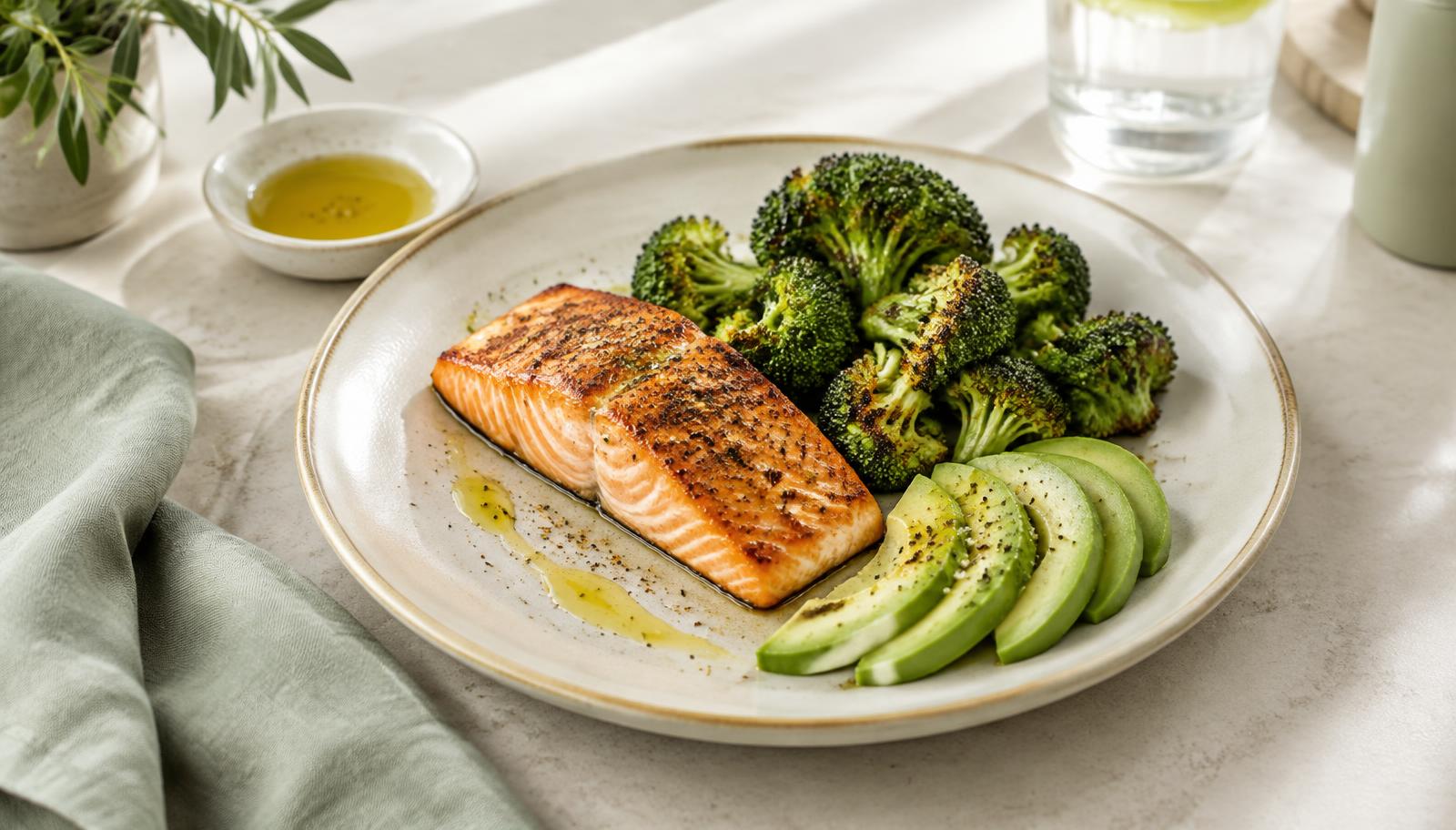
- Salmon with roasted broccoli
- Garlic chicken with green beans
- Easy Keto Egg Roll in a Bowl
- Taco bowls with ground beef and all the toppings
- Beef and broccoli in a quick skillet
If you'd like a full recipe for one of these, the Egg Roll in a Bowl is a good place to begin — it's one pan, protein-forward, and family-friendly:
What About Protein Shakes and Protein Bars?
Shakes and bars can be genuinely convenient — for travel, busy mornings, or days when cooking isn't happening. They're a tool, not a requirement, and nobody needs them to eat well on keto.
If you do use them, it's worth reading the label for a few things:
- Added sugar and total carbohydrate per serving
- The actual serving size — some packages contain two
- How much protein you're getting for those carbs
- The ingredient list, and whether the product agrees with your digestion
Whole foods most of the time, convenience products when they help — that's a reasonable balance for most people.
Can You Eat Too Much Protein on Keto?
Yes, in the sense that more is not automatically better. Very high intakes aren't necessary for most women, and pushing protein far beyond what's useful tends to crowd out vegetables and other foods without adding benefit. Protein is important; it isn't the only thing that matters.
It's also true that needs genuinely vary, so what looks like "a lot" for one person may be appropriate for another who is larger, more active, or training regularly. Anyone with kidney disease, or any condition that affects how much protein is appropriate for them, should follow individualized guidance from their own healthcare professional rather than general recommendations found online.
Protein and Menopause
The menopausal transition can coincide with changes in body composition and lean mass, and many women notice that what used to work no longer feels quite the same. Protein is one part of that picture — a supportive one — but it isn't a treatment, and it's not accurate to say that a high-protein keto diet addresses menopause symptoms.
What tends to help is the whole package: adequate protein, strength training, regular walking and everyday movement, eating enough food overall, sleep, recovery, and general diet quality. Each piece is modest on its own; together they make a real difference in how you feel. If symptoms are affecting your quality of life, that's a conversation worth having with your own healthcare professional.
For more on why this season can feel different:
Protein + Strength Training Is a Better Conversation
For years, the default question in diet culture has been "How little can I eat?" It's an exhausting question, and it rarely leads anywhere good after 40. A better one is: "How can I nourish and strengthen my body?" That shift changes what you pay attention to — building meals instead of shrinking them, adding strength instead of subtracting food.
Strength training doesn't have to mean a gym membership or heavy barbells. Light dumbbells, resistance bands, chair squats, wall push-ups, and simple home strength routines a couple of times a week all count. Start where you are, keep the sessions short enough that you'll actually do them, and let consistency do the work.
A Sample High-Protein Keto Day
Here's what a straightforward day might look like in practice:
- Breakfast — eggs with turkey sausage, sautéed spinach, and sliced avocado
- Lunch — a chicken salad bowl over greens with olive oil dressing
- Snack, if desired — plain Greek yogurt with a few berries
- Dinner — salmon with roasted broccoli and cauliflower
This is an example for illustration, not personalized advice. Portions, timing, and food choices should reflect your own preferences, appetite, and needs.
5 Common Protein Mistakes Women Make on Keto
- Eating very little protein at breakfast — coffee with cream isn't a meal, and it sets up hunger later
- Adding lots of fat before the protein portion is adequate, so the meal is rich but not satisfying
- Assuming a handful of nuts counts as a high-protein meal — nuts are mostly fat
- Eating very little all day and then feeling ravenous at night, which is a signal, not a failure
- Focusing so hard on protein that vegetables, fiber, hydration, and overall diet quality get ignored
The Ketoach Protein-First Approach
If you want the whole thing on one card, this is it:
- Protein first — anchor every meal
- Plants next — lower-carb vegetables at most meals
- Fat for flavor and satisfaction — enough to enjoy your food
- Move your body — including some form of strength work
- Repeat simple meals — you don't need variety every day
- Aim for consistency, not perfection
A brief note on safety: this article is general education, not medical or nutrition advice. People with kidney disease, diabetes, or cardiovascular conditions, those who are pregnant or breastfeeding, anyone with a history of disordered eating, and anyone with a medical condition that affects protein needs should seek individualized guidance from a qualified healthcare professional before making significant dietary changes.
Conclusion
Keto after 40 doesn't have to mean eating less or becoming more restrictive. For many women, the more useful focus is protein, strength, whole foods, recovery, and the overall quality of their meals. Build the plate instead of shrinking it, add a little strength work, and give it time. That's a version of keto you can keep — and keeping it is the part that matters.
Protein-First Keto After 40: Related Reading
Source
Want a simpler way to get started? Download the free Keto After 40 Starter Kit.
Get the Free Starter KitKeep going with Ketoach
Want ongoing keto support? Explore the Ketoach Community.
Explore Ketoach Community