Protein vs. Fat on Keto: What Matters More After 40?
Keto doesn't mean adding unlimited fat. Here's what protein and fat each do, and a simpler way to balance them on your plate after 40.
The short answer: both matter, but they do different jobs. Protein supports muscle and tends to make meals more satisfying. Dietary fat provides energy, flavor and fullness, and helps your body absorb certain vitamins. Keto does not require adding unlimited fat — and for many women over 40, getting protein right first, then adding fat to taste, is the simpler approach.
This article compares the two. For the full protein-first way of building keto meals, see the main guide:
What Protein Does
- Provides the building blocks your body uses to maintain and repair muscle and other tissues
- Supports muscle maintenance with age, especially alongside strength training
- Tends to be satisfying — protein-rich meals are associated with greater fullness in research, though responses vary
Expert groups focused on older adults have highlighted protein, paired with exercise, as important for maintaining muscle function with age.
What Dietary Fat Does
- Provides energy — especially relevant on keto, where carbohydrate is lower
- Helps your body absorb fat-soluble vitamins (A, D, E and K)
- Adds flavor and texture, which makes simple meals enjoyable
- Can add to satiety as part of a balanced meal
The Misconception: "Keto Means Adding Lots of Fat"
A common idea is that keto only works if you pile on butter, oil and cream. On keto, fat does make up a larger share of energy because carbohydrate is low — but that doesn't mean more added fat is always better.
Eating dietary fat does not automatically burn body fat. Research on body weight regulation shows that changes in body fat depend on overall energy balance over time, and that when calories and protein are matched, differences between higher-fat and higher-carb diets in body fat loss are small. Fat is energy-dense, so large amounts of added fat can add up quickly without making a meal more filling.
Why Protein Often Deserves Attention First After 40
Many women following a lower-carb eating pattern end up with meals that are rich but light on protein — coffee with cream, a handful of nuts, a cheese plate. These can taste great but may not hold you for long. Starting with protein, then adding fat for flavor, tends to produce plates that are both satisfying and balanced.
That doesn't make fat the enemy. It just means fat is best used to make a good meal enjoyable, rather than as a goal in itself.
What About Protein Knocking You Out of Ketosis?
You may have heard that protein turns into sugar and stops ketosis. The body can make glucose from some amino acids, but for most people eating a reasonable amount of protein this concern is generally overstated. Deliberately limiting protein to protect a ketone reading can mean less satisfying meals and less support for muscle.
A Simple Way to Balance Your Plate
1. Protein first
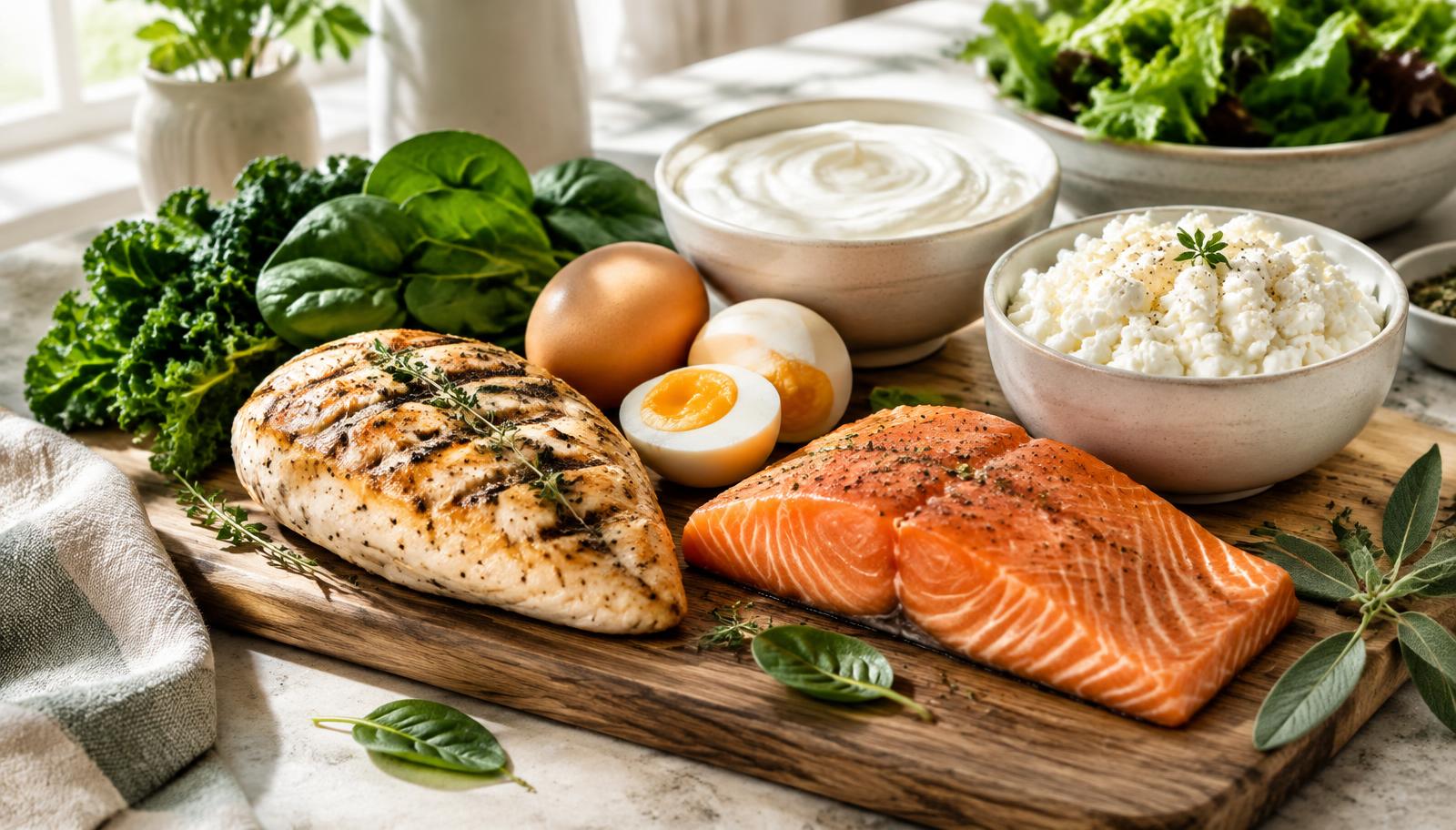
Eggs, chicken, fish, beef, turkey, Greek yogurt or cottage cheese as the anchor of the meal.
2. Lower-carb vegetables next
Greens, broccoli, zucchini, cauliflower or green beans for volume and fiber.
3. Fat for flavor
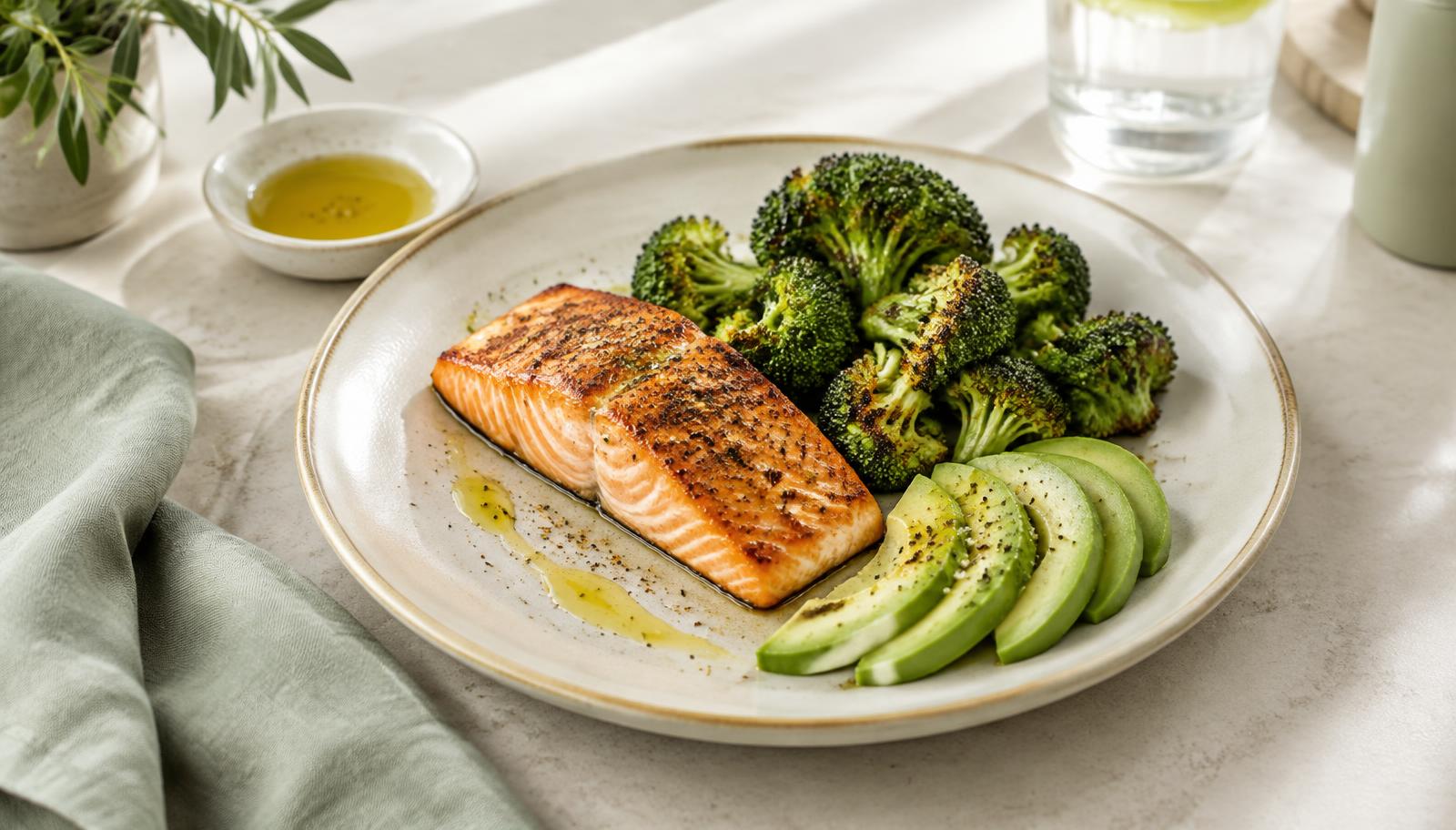
Olive oil, avocado, butter, cheese, nuts or seeds — enough to enjoy the meal, not a measured "fat bomb."
Some cuts of meat, salmon, eggs and cheese already bring fat with them, so a meal built this way often needs little added fat at all.
Everyone's Balance Is a Bit Different
There's no universal protein-to-fat ratio that suits every woman. Your needs depend on your body, activity, appetite, goals and health. Use how you feel — satisfied, energized, not constantly snacking — as a practical guide, and get individualized advice if you have a medical condition.
Fats Worth Choosing Most Often
- Olive oil and avocado
- Nuts and seeds
- Fatty fish like salmon and sardines
- Butter and cheese, used for flavor
For more on what to limit and what to choose instead on keto:
Keep Going
The free Keto After 40 Starter Kit includes a 7-day meal plan built around simple, balanced plates.
This article is general education, not medical or nutrition advice. If you have kidney disease, diabetes, a heart condition, a history of disordered eating, take medication, or are pregnant or breastfeeding, talk with your healthcare professional or a registered dietitian before making significant changes to how you eat.
Sources
- Obesity Energetics: Body Weight Regulation and the Effects of Diet Composition — Hall & Guo, Gastroenterology (2017) →
- The role of protein in weight loss and maintenance — Leidy et al., American Journal of Clinical Nutrition (2015) →
- Protein intake and exercise for optimal muscle function with aging: Recommendations from the ESPEN Expert Group — Deutz et al., Clinical Nutrition (2014) →
Want a simpler way to get started? Download the free Keto After 40 Starter Kit.
Get the Free Starter KitKeep going with Ketoach
Want ongoing keto support? Explore the Ketoach Community.
Explore Ketoach Community